Your FAQs

Test the Penguin

Frequently Asked Questions

Please look through all 5 sections, if your question is not answered please call or email us. We’re here to help!

Stove Size and Installation

What size stove do I need? Stove Calculator

As a rough guide, 1kW of heat will be sufficient for 14 cubic metres of space

For example:
A room size of 5.4 m x 5.4m x 2.4 m = 70 cubic metres
Divide 70 cubic metres by 14 = 5kW

Therefore for this example room, assuming that there is no other form of heating and it is relatively draught free, with insulation, you would require a 5kW stove.

However this is rough guide and will be affected by factors such as the number of outside walls, the amount of glazing and the level of insulation.
We recommend that you get the advice of your Chilli Penguin stockist.

Who can install my stove?

In order to certify a stove installation you must use an installer registered  with a government approved competent persons scheme, such as HETAS or OFTEC. You cannot self certify if you self install. You will need to contact your local Building Control department who will come out and inspect the installation., sometimes at multiple stages. There will be a charge for this service. The installation must conform to the ‘Building Regulations’ 2000 approved Document J and all manufacturers guidelines. We strongly recommend using a qualified, experience and recommended installer.

My house doesn’t have a chimney, can I have a stove?

In many cases, yes, you can. You will require a flue for the removal of smoke and combustion gases. It will need to be twin walled insulated steel flue which will need to be swept regularly just as a chimney would. There will be number of considerations such as; recommended distances from combustibles and non combustibles, for both the stove and flue, the exit through the wall/ceiling, the distances from ceiling joists, the exit through the roof and length of external flue. We always recommend a survey from HETAS qualified engineer. This type of installation is covered by building regulations.

Should I line my chimney?

It is strongly recommended that your chimney is lined with a liner suitable for a solid fuel appliance. Depending on the condition of the liner and the ability to make a gas tight connection between the stove and the liner it may be advisable to put a new flexible stainless liner in. All liners come with a period of warranty ranging from 5-25 years depending on the grade and quality of the materials used. If your property comes with an existing clay liner the diameter may be too great for closed a solid fuel appliance like a stove. You may still be able to put a flue liner inside to reduce the diameter. We recommend that you seek advice from a HETAS qualified engineer. This type of installation is covered by building regulations.

What about chimney sweeping?

Your chimney must be swept at least once a year by a qualified chimney sweep. The approved list is available from HETAS or NACS. You may want to consider provisions for sweeping with an access panel if you have an oven model. You will need an access panel if you have a rear flue on a cooker stove. Inform your sweep about what sort of liner you have so they can use the appropriate brushes. Some flue liner guarantees will be invalidated if not swept properly and with the right equipment.

If the flue diameter is 6 inches or less it is possible to sweep through all our stoves (with the exception of the Chilli Billie),.The oven models require super flexible rods such as the viper. Great care must always be taken when sweeping a flexible liner to avoid damage to the liner.

To sweep the Chilli Billie you will either need an access panel or sweep from the top.

Why do I need a sweeping access panel with a flue diameter of over 6 inches?

If your flue has a substantially greater diameter than your stove pipe the diameter of brushes that will fit through your stove pipe will not be sufficient to reach the sides of your flue and clear it of deposits.

What size is the flue collar on Chilli Penguin Stoves?

The flue collar diameter is 5 inches(125mm). The flue size required is 6 inches (150mm). An adaptor piece is required to take the system from 5 to 6 inches. The 6 inch flue is ideal for closed appliances like a stove, however it is possible to use a 5 inch flue if you fit the smoke control kit (DEFRA kit) to our pre-Ecodesign range.

All our current Ecodesign range are factory set to be suitable for smoke control areas so can run on a 5″ flue.

Can any of the Chilli Penguin stoves be rear flued?

There are variations in how each of the stove models can be rear flued

The Chilli Billie Gentoo flue is in a single fixed position, this can’t be changed.

The Short Penguin family without cookers and both Woody stoves (Short/Chubby 5/Woody (cat)/Woody M/F) : there are two types of rear flue adaptor available, vertical and horizontal, your HETAS installer will be able to advise you. Order the adaptor when you place the stove order. In addition you can request that the stove is made “rear flue ready”- which means we will cut out the heat shield and fit the top blanking disc for a nominal charge (or this can be done by your installer on site). The adaptor is fitted on site.

The Short Penguin family with cookers (Hungry/Fat/High and Mighty) and the Popty and 78 families ( Popty Cube, Popty Lofty/Popty Stout/78) : these stoves do NOT require adaptors. You need to remove the rear heat shields and knock out the flue holes in them. Then swap the top collar with the rear blanking disc. Refit heat shields.

The Stock Cube and Penguin 7 families (the Stock Cube/Stock Cube Convector/Fubsy/Penguin 7/ Penguin 7 Convector/Idris) : order the stove “rear flue ready” . The stove will then come with a flat top and the rear flue collar factory fitted.

What is a Direct Air kit & can it be retrofitted?

A direct air kit is an option that is available when you order your stove. It is fitted in the workshop, when the stove is made. It is available for all models except the Chilli Billie and the Fin. HOWEVER  if the stove is fitted on a log store or a plinth the Direct Air Kit can ONLY be fitted with spigot mounted horizontally.  Vertical fitting is not possible due to interference with the stove body/plinth.

What is it? It is a chamber fitted to the underneath of the stove to which a flexible tubing is attached that can be fed through the wall of the property to the outside. It allows a stove to fed by external air. It is sometime specified by architects for modern airtight houses to provide additional oxygen to feed the fire. This is not approved for a true passive house.

What are the measurements? It has a 68 mm spigot on the rear of the stove, leading from the direct air chamber. It is supplied with a 1 metre length  of tubing with an external diameter of 75mm.

Can it be retro fitted? This should be ordered at the point of the stove order. It is extremely difficult to retro fit to any of the multi fuel stoves or the Woody (cat). We would need to have the stove back and fit it here in our workshop. It is possible to retrofit to the Stock Cube series (the Stock cube, the Stock cube convector, the Fubsy), the Penguin 7 series (Penguin 7, Penguin 7 convector, Penguin Idris) and the Seventy Ates. However we recommend that they are factory fitted.

A direct air kit is an option that is available when you order your stove. It is fitted in the workshop, when the stove is made. It is available for all models except the Chilli Billie and the Fin. HOWEVER  if the stove is fitted on a log store or a plinth the Direct Air Kit can ONLY be fitted with spigot mounted horizontally.  Vertical fitting is not possible due to interference with the stove body/plinth

How will my stove arrive?

We wrap our stoves in a compostable bag, inside a cardboard box, cling wrapped and strapped to an individual stove pallet. That pallet is securely strapped to a larger shipping pallet and then cling filmed again with other stoves or parts being sent to a stockist’s address.

Inside the stove your grate and fire retaining bar will be cable tied together in situ. You will find your user manual, gloves, tool, ash pan (if your stoves requires one), aerosol of stove paint (coloured stoves only), oven shelve(s) (cooker stoves only) and a reminder to register your warranty

At this point your paint has been air cured only and is still soft, it will set or ‘cure’ during your initial fires, so handle with care, particularly the lighter colours. Be aware that the grate, fire retaining bar and ash pan will have a feather coat of paint on them to avoid rusting in transit. This may well come off or chip in transit if the internal parts rub on each other and may discolour during your first few fires. This is completely normal. The intense heat inside the firebox and the soot/ash tend to discolour and degrade the protective layer of paint on these internal parts.

Problem Solving and Maintenance

Are there any regular maintenance jobs?

Check rope seals are not frayed or coming away, door glass is not cracked or loose, check fire bricks are not cracked or deteriorated, throat plate does not have a build up of ash on top of it and (for the oven models) remove ash from the top of the oven box.
More more information please see the Looking After Your Penguin page.

My firebricks have cracked, what should I do?

If it is a hairline crack only and the firebrick stays in place, on the back, sides or base, the stove will come to no harm. If you notice a crack in the throat plate brick, (the one that forms the ‘roof’ of the stove) we recommend ordering a new one, as this will not remain in place and will fall into the firebox. If you use the stove with no throat plate brick, the metal throat plate which it sits in, might warp. Once the metal throat plate has warped it is often not possible to slide in a replacement brick, the warped surface can make the fit too tight. If your throat plate firebrick does break during a fire there is not much you can do about this until the fire burns out for your own safety,

You can order spares through our online spares shop, (top right hand corner of the website). The spares are listed by stove model, (you will also need to select whether you have an Ecodesign or pre Ecodesign model). There are some variations in the spares for some of the stoves models, depending on the age of the stove. Where there are variations, there are diagrams with measurements, to help you identify the correct spares.

How often should I sweep my chimney?

Your chimney must be swept at least once a year by a qualified chimney sweep. The approved list is available from HETAS or NACS. Inform your sweep about what sort of liner you have so they can use the appropriate brushes. Some flue liner guarantees will be invalidated if not swept properly with the correct equipment

If the flue diameter is 6 inches or less it is possible to sweep through all our stoves (with the exception of the Chilli Billie), if the correct sweeping rods are used. The oven models will require super flexible rods such as the viper. If you have a rear flued cooker model you will probably need to sweep through a flue access panel. Great care must always be taken when sweeping a flexible liner to avoid damage to the liner.

To sweep the Chilli Billie you will either need an access panel or sweep from the top.

How can I clean the surface of the stove?

To clean the painted surface use dry methods only. When the stove is cool use a soft brush, lint free cloth or a vacuum cleaner. DO NOT use wet methods, not even a damp cloth! You can touch up most marks and signs of long term wear. For more information please see the Painted Stove Surface section on the Looking After Your Penguin page.

The glass in my stove door is going black, what is happening?

During the burn cycle you will be aware of areas of discolouration, this will usually burn off with heat. This is usually observable when the stove is being lit from cold and usually in the corners or edges. If fuel is touching the glass you will get localised discolouring, this will burn off as the stove get hotter. If it doesn’t burn off, please see the Door and Oven Glass section on the Looking After Your Penguin page.

If you find you are getting constant blackening,  you may not be using the air controls correctly or your fuel may have too much moisture in.

The air control knobs are sticking. What can I do to release them?

This is something that can usually easily be fixed in situ.  In most cases, the control knobs just need a ‘vigorous’ shake to slide over any dust, grit, ash or cinder caught in the grease.  This usually clears up most problems. Use the air control tool that came out with your stove. Place the square aperture under the air control knob, this will give you more leverage to push and pull.

There is ash in my oven, am I doing something wrong ?

No! There is always ash in and around a stove, what can happen is when you open a door in the room where the stove is, negative pressure is caused,. This can allow a small amount of ash to be sucked into the oven box. Some, but not all of our oven boxes have a small gap in the rope seal under the glass, this is part of the design. Ash can get in there, or it just happens when the oven door is open. Just hoover it out when the stove is cold.

The fire cement has fallen out where the flue pipe goes through the register plate and I have debris falling onto my stove, what can I do?

(the register plate is the surface that seals off the chimney space above your stove in a fireplace recess)

You can replace it with more high temperature fire cement, but it will crack again. A better solution may be to fit a stove debris collar (5” or 6” depending on the diameter of your flue), along with sealing any gaps using a high temperature rope seal. If there are any remaining gaps fill them with high temperature silicone. Link to an instructional Youtube video here: https://www.youtube.com/watch?v=vnZ261JAWkU

There is smoke coming out of my stove, what should I do?

Under extreme weather conditions, usually very cold or occasionally during heavy fog, there is an occurrence called a ‘cold plug’ which can happen within your flue. Simply put, the air within your flue hasn’t warmed up and creates a temporary plug, which prevents smoke from escaping upwards. While it is not drawing as it should, the smoke will look for the easiest alternative exit including any gaps within the stove body and air controls, and can seem quite alarming. To avoid this happening in extreme cold weather, we recommend starting the fire with 3 or 4 firelighters which will gently warm the flue, gradually adding kindling and split logs. If it has been particularly cold, some people will leave the stove door open for 30 minutes before lighting the fire so the air in the room will pre-warm the chimney for you. This issue occurs more commonly in an external flue system, not placed within a masonry chimney.

If this is happening during your first stove fire and the weather conditions aren’t particularly extreme, or the chimney/flue has had a recent disturbance, let the fire go out completely and get your chimney inspected as soon as possible. Do not use the stove while you are awaiting inspection.

Fuels and Clean Burning

Which fuels can I burn?

Some of the Chilli Penguin range are WOOD only stoves. In these you can burn dry, seasoned or kiln dried split logs only.

In Chilli Penguin multi fuel stoves seasoned/kiln dried wood and smokeless fuels suitable for closed appliances can be burnt. These fuels should NOT be burnt in the same fire. In a multi fuel stove you should have EITHER a wood fire OR a smokeless fuel fire. If you burn both fuels in the same fire (with the exception of a few pieces of kindling) you can damage both your stove glass and flue.

The Fin inset stove is a wood only stove, but a smokeless kit is available. If a smokeless kit is fitted, you can only burn smokeless fuel.

Our stoves are not tested to use any of the manufactured logs or briquettes so we do not recommend their use and it will invalidate your warranty.

For local suppliers of seasoned wood contact WoodSure or ask around locally for recommendations. There are a number of companies offering kiln dried wood such as Certainly Wood. Seasoned wood must have been cut and stored for at least one year and be dry.

Three ways to tell that wood is dry is:

1. Use a moisture meter, moisture of less than 25%

2. Should sound hollow when logs are banged together

3. Visible cracks in end of log

For advice about smokeless fuel suitable for a closed appliance like a stove, ask your local coal merchant and consult the HETAS approved list.  Avoid solid fuel with a high sulphur content.

Can I burn house coal?

No, under no circumstances burn house coal on a closed appliance such as a stove. It is not possible in a closed appliance to get enough oxygen for complete combustion. This can result in a build up of volatile gases in the stove and chimney. These are potentially explosive.

What is ‘seasoned wood’?

Seasoned wood refers to wood with a maximum moisture content of 20%, ideally between 12-20%. This is achieved by storing it for a minimum of 12 months once cut, prior to burning. This will vary from species to species and may require longer. If the wood is not seasoned you will be creating a lot of smoke and steam with very inefficient combustion. The following are useful tips to help you identify if your wood is dry enough to burn:

  • look for visible cracks at end of the logs
  • bang two logs together, you want a hollow sound
  • use a wood moisture measuring device

If you are looking for a local wood supplier, www.woodsure.co.uk has a list of certified fuel suppliers

This is a helpful article on this topic, https://www.hetas.co.uk/consumer/advice-hub/advice-articles/benefits-of-dry-wood-over-wet-wood/

What does ‘Clean Burn’ mean?

This is the ability of a stove to burn off volatile gases given off by the fuel which would otherwise go up the flue and into the atmosphere. This is usually achieved by introducing additional pre-heated air at the top of the combustion chamber. This function gives maximum efficiency and heat output from the fuel, together with having less detrimental impact on the environment.

What is the environmental impact of burning wood?

There are a number of environment issues with wood burning, they usually fall into these three categories; the carbon footprint, the emissions and forest land clearing

Carbon Footprint
A carbon footprint simply means how much carbon a given activity adds to or subtracts from the atmosphere. The effect of burning wood is close to neutral with regards to carbon.

As they grow, trees remove carbon from the atmosphere. That carbon is released into the atmosphere when the wood is burnt as fuel.
The tree grown to replace that tree will reclaim the carbon from the air. Therefore supporting wood growers who practise good forestry management and re plant what they cut down makes sense
It is worth remembering that we can’t avoid the carbon being released into the atmosphere. Even if a tree is left to grow old, die and rot in the forest, the carbon in it will be released as it decomposes. Burning in a fireplace is a rapid form of oxidation. Rotting on a forest floor is also oxidation, just slower. Wood burning needs to be viewed as part of an ongoing system or cycle, not as a snapshot.
(There will be fuel used to used to harvest the wood, usually non bio-fuels so the carbon footprint isn’t entirely neutral, but this is relatively small. In addition there is the transport from the forest to your home, so the more locally wood is purchased the better).

Emissions from burning wood
This is the issue that has been in the news since the Clean Air strategy 2019 was launched. Among other things this strategy looks at the emissions produced by different industries including wood and solid fuel burning stoves industry. Emissions had to be reduced in a number of categories including particulates, (or dust particles). All stoves had to meet  Ecodesign criteria by 2022.

Particulate matter is everything in the air that isn’t a gas, a suspension of particles which are solid, liquid or somewhere in between. It can come from natural sources such as pollen, sea spray and desert dust, and human made sources such as smoke from fires, soot from vehicle exhausts, dust from tyres and brakes, as well as emissions from industry. The following article by Hetas has further  information.

All of our 5kW – 7 kW stoves are Ecodesign stoves. The Chilli Billie will be the last stove to undergo the re design process.

Forest clearing
Good forestry management means investing in renewal, re growth and offering diverse eco-habitats. Source wood from well managed forests.

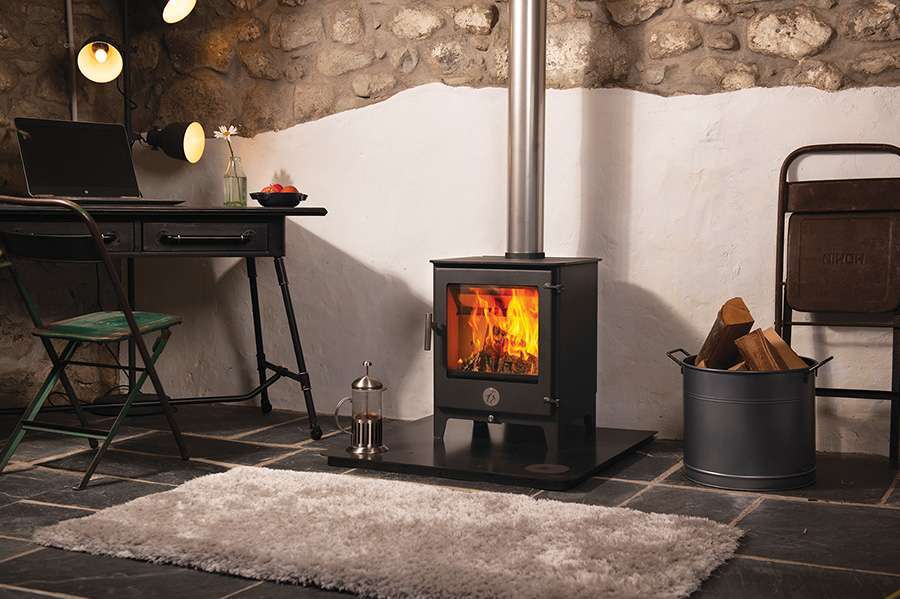
Are Chilli Penguin Stoves Ecodesign?

All of the Chilli Penguin stove range were re-designed and independently tested to meet the Ecodesign criteria. Our stoves have gone beyond the Eco design limits, they have all met the more stringent HETAS Cleaner Choice certification as well. They can be found on the HETAS website.

What are catalytic converter stoves?

We manufacture a catalytic converter stove. This is called the Woody Eco (Cat). This is a wood only stove. A catalytic converter is a honeycomb structure that has a special coating which chemically converts harmful gases and super heats to burn off smoke particulates. The result is a marked reduction in the smoke particulates.

The requirement of the Eco design standard it for the particulate figure to be below 40 mg/m3.
The figure for the Woody Eco (Cat) is 11 mg/m3.
This is the cleanest burning stove that we produce.

What is an Ecodesign stove?

The Ecodesign regulations effect most domestic energy related products, including solid fuel stoves. As far as stoves, they specify new seasonal energy efficiency levels and maximum emission requirements. It will be illegal to manufacture and sell new stoves after 1st January 2022 that do not comply with the Ecodesign requirements, unless they are already in the supply chain. Although an EU generated piece of legislation it will be adopted into UK law.

The measures covered by the Ecodesign regulations are particulate matter (PM), organic gaseous compounds (OGC), carbon monoxide (CO), nitrogen oxides (NOx), and seasonal efficiency.

In order to be an Ecodesign stove, a stove must be independently verified as meeting these stringent emission requirements. Particulate matter or PMs are the most commonly recognised of these measures. The maximum limit for these is 40 mg/m3. All these measures are listed in our technical details tables at the foot of each of the stove product pages.

Will wood burning stoves be banned?

There is no indication that legislative changes to ban domestic wood burning are likely. The wood-burning industry is represented at a government level by  HETAS. The following article by HETAS has some useful information https://www.hetas.co.uk/ban-on-wood-stoves/

There has been a change to the planning rules in Scotland in relation to fitting solid fuel stoves into a new build homes. It has successfully been challenged. It is in period of review but expected to be overturned.

Chilli Penguin Warranty

Is my Chilli Penguin stove under warranty?

We  offer a FREE 7 year extended warranty for all of our stoves with the exception of the Chilli Billie, (the warranty period for the Chilli Billie which is 5 years) provided that you purchase your stove from your local approved Chilli Penguin Stockist and you register it online within 3 months of your purchase. This is to ensure that you get a genuine Chilli Penguin stove and you have someone local to you, who can offer advice, installation, aftercare and ongoing servicing.

See the  warranty section in the menu for further information. When you register your warranty, you will get a “Penguin Owners Account” which will remember your stove model.  This is really helpful when you are ordering spares and maintenance items. We also send out a few stove care emails in your first year to help your penguin settle into its new home, customers tell us that they find these really helpful.

If you would like help with registering your warranty please contact either your stockist or ourselves, we would be happy to help.

Have Chilli Penguin stoves been independently tested?

Yes. All Chilli Penguin stoves are independently tested to the standard EN13240:2001 and EN13240A2:2004.

The Chilli Billie is tested to EN13240. They all meet Ecodesign criteria and the more stringent HETAS cleaner choice certification

Spare Parts, Ordering and Delivery

How can I place an order for a Chilli Penguin stove?

We have a network of over 120 stockists across the UK, including our own showroom in Pwllheli for our local customers. To find your nearest stockist use our postcode Shop Finder. Alternatively, if you have already fallen for a penguin, you don’t need to leave your chair, we can put your local stockist in touch with you directly. They will contact you to discuss your stove and offer a survey, without you leaving home. Find more details on our Order and Delivery page, under Buying a Penguin.

Where is my order?

Once you’ve have ordered your stove through your local Chilli Penguin stockist, they will place the order with us and we will confirm a delivery date. Our stoves are made to order and the lead time can vary depending on the time of year. However we sometimes have a limited amount of stock of the most popular models and colours. Please look at our ordering and delivery page for more information.

How do I order a spare part?

We have an online spares shop or you can order through your local stockist. You will need to know the name of your stove model and whether it is an Ecodesign stove or not. There is a diagram to help you identify this on the spares landing page. If you have any doubts there are drawings and measurements on each of the spares pages, https://chillipenguin.co.uk/spares-shop/